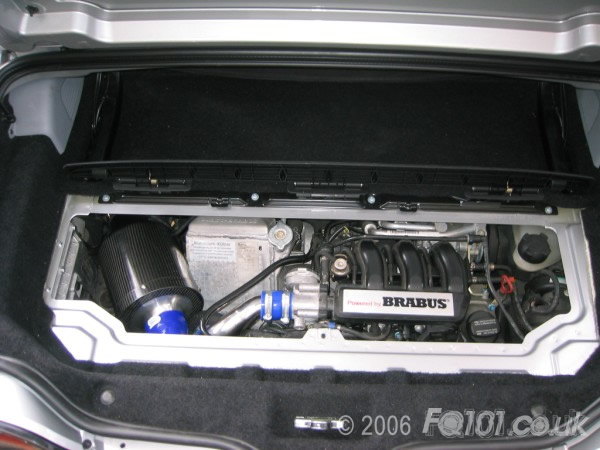
| Turbo change |
|
|
Whether you are upgrading or simply changing out of necessity, this guide should take you through the ins and outs. Remove the exhaust, use steps 1,2 and 3 shown here.
Now remove the intercooler pipes for ease of access. This guide should be able to help.
Using a 17mm socket, undo the lower banjo bolt for the water transfer pipe (this is where you will get an airlock later!). It will drain about 500ml of coolant from here, so place a bowl or similar underneath!
Remove the top banjo pipe water pipe, also 17mm.
Now you must undo the manifold studs (13mm), approximate locations shown here... you can (just) reach them all using a combination of extension bars and flexibility!
Depending on the age (running time) of your turbo you run the risk of turbo studs snapping in the block. The amount of stud on show will determine whether you have to drill and use a stud extractor, or grip the stud with mole grips.
Now the turbo is free, you need to 'simply' move the turbo out. If there are still studs in the block, you may need to just be a little more careful with the turbo upon removal, and you may find that the metal exhaust gasket gets caught in the thread of the remaining studs.... just persevere!!.
(The picture above shows the wastegate actuator still in situ; I chose to change the wastegate during this turbo change) Use some fine grit 'wet and dry' to clean up the mounting surface of the block, just to ensure a clean seal when you refit.
Place a couple of studs in the block before you begin.
Once located, tighten up the new studs and nuts (16Nm).
Reattach the banjo bolts for the water transfer (19Nm), reattach the oil lines from underneath, (8Nm), and reattach the TIK and associated pipes. Also reconnect the intercooler pipes, and if you had disconnected the electrical connection to the cycle valve - remember to reconnect that too!
Reconnect the exhaust and perform a test run
Now bleed the coolant system by one of two possible methods. You can either jack up the near-side front wheel, and run the car until warm or, if you have the opportunity, a high-revving run down a short road will make the water pump move the air locks quicker - this is a very effective method!! |